
Sandra Mangas
Learning Accelerators
Blog · Sandra Mangas

Learning Accelerators

6 DIC 2024

Estos días he estado probando los nuevos Learning Accelerators en MS Teams. Los Learning Accelerators de Microsoft son una categoría innovadora de herramientas integradas en Microsoft 365 Education, diseñadas para facilitar la creación, revisión y análisis de tareas a la vez que ofrecen al alumnado feedback en tiempo real. Esto podría convertirlas en una herramienta inclusiva e ideal para empoderar al alumnado.

Herramientas como Reading Progress y Speaker Progress se presentan como soluciones innovadoras para desarrollar competencias clave, pero ¿cómo de eficaces son en realidad? Tras probar ambas, está claro que, aunque aportan valor, también presentan retos importantes que limitan su impacto práctico.

Reading Progress

Reading Progress permite al profesorado asignar lecturas para que el alumnado las lea en voz alta y reciba informes automáticos que evalúan la precisión de la pronunciación, la expresión y la comprensión lectora. Su objetivo es reducir la carga de trabajo del profesorado y permitir que el alumnado mejore su pronunciación y comprensión, con la flexibilidad de repetir la lectura tantas veces como el profesor permita.

La principal limitación que noté es que los textos generados para ciertas edades parecen demasiado complejos; no creo que la IA ajuste bien el nivel de dificultad. A pesar de ello, Reading Progress es útil como herramienta complementaria: permite evaluaciones rápidas y a gran escala y ayuda a identificar al alumnado que pueda necesitar una atención más personalizada. De momento solo lo he probado yo, asumiendo los papeles de alumna y de profesora.

Speaker Progress

Después probé Speaker Progress, diseñado para ayudar al alumnado a desarrollar competencias de presentación y oratoria. Ofrece feedback automático sobre aspectos técnicos como el ritmo, las muletillas y la claridad del discurso. Como mi alumnado se preparaba para presentar nuestra empresa simulada, Riberpublic SLS, en una feria, les asigné una tarea con Speaker Coach para practicar su discurso de ventas.

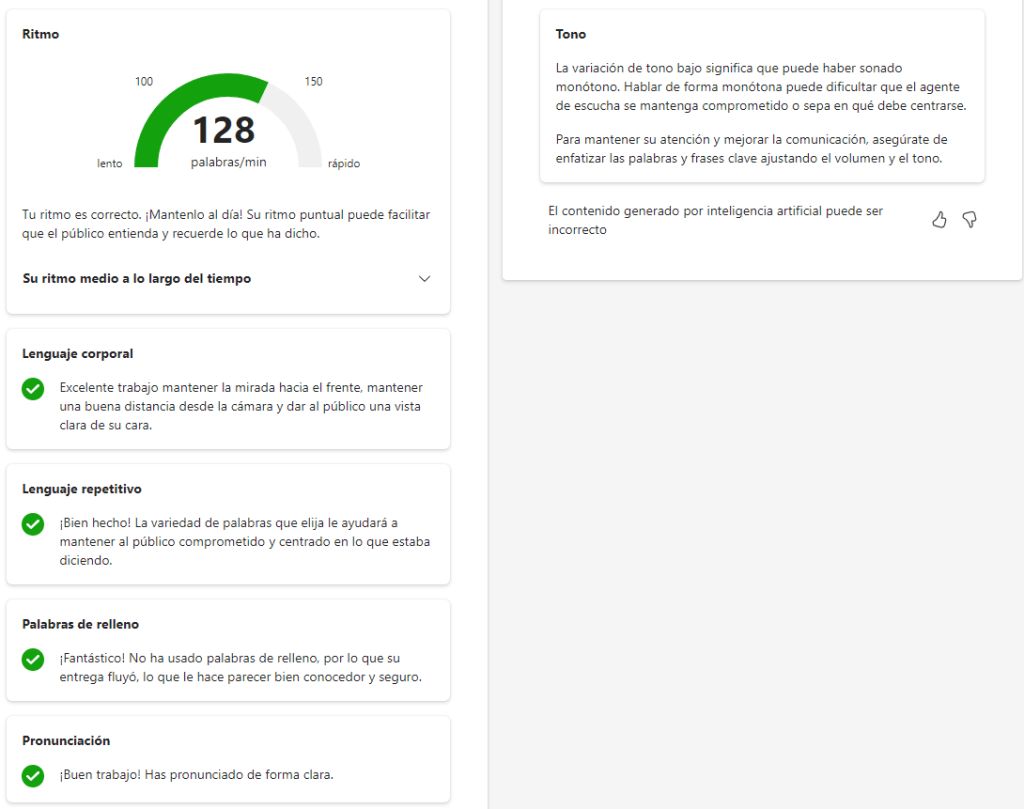
Tras probarlo noté varias limitaciones importantes: no detecta cuándo el alumnado lee su discurso, no evalúa si miran a la cámara, y las evaluaciones generadas por la IA eran sistemáticamente muy positivas incluso cuando los discursos necesitaban mejorar mucho.

Aquí tienes un ejemplo de informe que Speaker Coach dio a uno de mis alumnos. Subió un vídeo solo con audio y claramente leía la mayor parte del texto, trabándose con las palabras y usando muletillas y lenguaje repetitivo… y aun así el informe fue muy optimista.
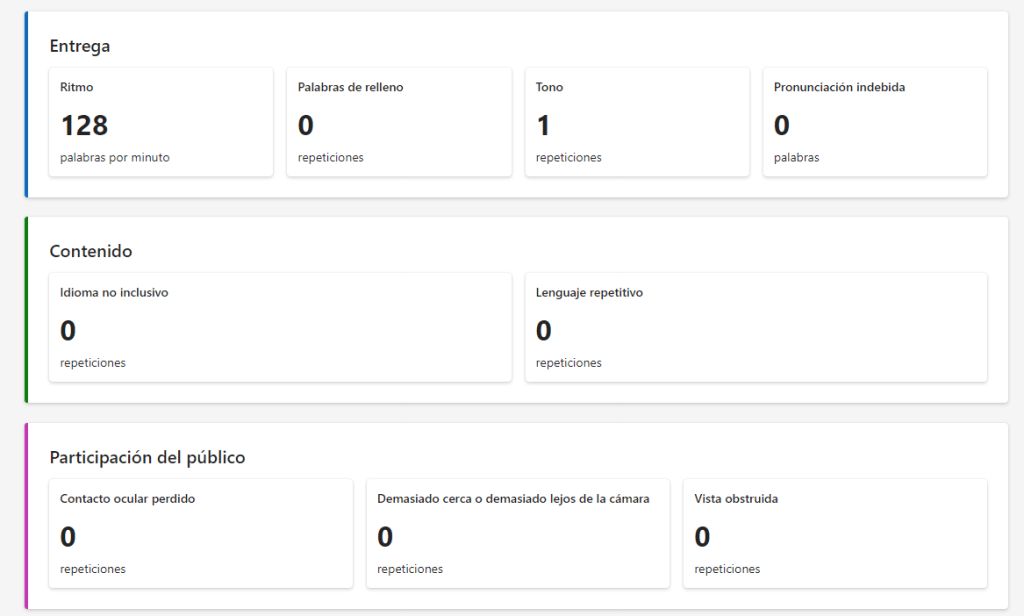
A pesar de estas limitaciones, Speaker Coach es un gran punto de partida para practicar la oratoria en un entorno de baja presión: el alumnado puede observarse y repetir la tarea hasta quedar satisfecho. Como alguien que odia hablar en público, me parecen muy útiles las herramientas que permiten practicar de antemano. Aun así, no puede sustituir la evaluación personalizada de un docente, y sus informes hoy por hoy no son fiables.

En conclusión, tanto Reading Progress como Speaker Coach tienen potencial para ayudar al profesorado y empoderar al alumnado, pero todavía presentan limitaciones notables. Con más desarrollo podrían volverse más valiosas; de momento conviene verlas como apoyos complementarios más que como soluciones integrales.

Blog · Sandra Mangas

Learning Accelerators

DEC 6, 2024

These days, I've been testing the new Learning Accelerators in MS Teams. Microsoft's Learning Accelerators are an innovative category of tools integrated into Microsoft 365 Education, designed to facilitate the creation, review and analysis of tasks while providing students with real-time feedback. This could make them an inclusive, ideal tool for empowering students.

Tools like Reading Progress and Speaker Progress are presented as innovative solutions for developing key skills, but how effective are they really? After testing both, it's clear that while they offer value, they also face significant challenges that limit their practical impact.

Reading Progress

Reading Progress lets teachers assign reading passages for students to read aloud and receive automatic reports evaluating pronunciation accuracy, expression and reading comprehension. Its goal is to reduce teachers' workload and let students improve their pronunciation and comprehension, with the flexibility to repeat the reading as many times as the teacher allows.

The main limitation I noticed is that the texts generated for certain age groups seem overly complex; I don't think the AI adjusts the difficulty level well. Despite this, Reading Progress is useful as a complementary tool: it enables quick, large-scale evaluations and helps identify students who may need more personalized attention. So far I've only tested it myself, taking on both the student and teacher roles.

Speaker Progress

I then tried Speaker Progress, designed to help students develop presentation and public-speaking skills. It provides automatic feedback on technical aspects like pacing, filler words and speech clarity. Since my students were preparing to present our simulated company, Riberpublic SLS, at a business fair, I assigned them a task using Speaker Coach to practice their sales pitch.

After testing it I noticed several important limitations: it doesn't detect when students are reading their speech, it doesn't evaluate whether they are looking at the camera, and the AI-generated evaluations were consistently very positive even when the speeches needed significant improvement.

Here's an example of a report Speaker Coach gave one of my students. They uploaded an audio-only video and were clearly reading most of the text, stumbling over words and using filler and repetitive language — yet the report stayed upbeat.

Despite these limitations, Speaker Coach is a great starting point for practicing public speaking in a low-pressure environment: students can observe themselves and repeat the task until satisfied. As someone who hates public speaking, I find tools that let you practice in advance incredibly helpful. Still, it cannot replace personalized evaluation from a teacher, and its reports are currently unreliable.

In conclusion, both Reading Progress and Speaker Coach have the potential to assist teachers and empower students, but they still have notable limitations. With further development they could become more valuable; for now they should be seen as complementary aids rather than comprehensive solutions.

← Volver al blog← Back to the blog